The Maruti Alto K10 continues to hold a special place in India’s entry-level car market because it blends low running costs, compact size, and easy city driving.
Even in 2026, the hatchback remains one of the most talked-about budget cars for first-time buyers, daily commuters, and families looking for an affordable second vehicle.
What keeps the Alto K10 in the news is not a dramatic redesign, but its steady evolution. Maruti has kept the formula simple: a small car with a practical cabin, efficient engine choices, and a price tag that still makes sense for budget-focused buyers.
Latest updates and positioning
Recent coverage shows that the Alto K10 is still being tracked closely in the market because of its updated safety package and changing price structure.
One of the biggest talking points has been the addition of six airbags as standard across variants, a change that made the model more attractive to safety-conscious buyers.
The car’s ex-showroom pricing currently starts at around ₹3.69 lakh and goes up to ₹5.45 lakh, depending on the trim and transmission chosen.
Also Read: Infinix GT 20 Pro 5G 120FPS gaming processor smartphone, 144Hz amoled display and storage is 256GB
That range keeps it among the most accessible cars in the country, especially for buyers stepping up from two-wheelers or looking for an easy urban commuter.
Design and road presence
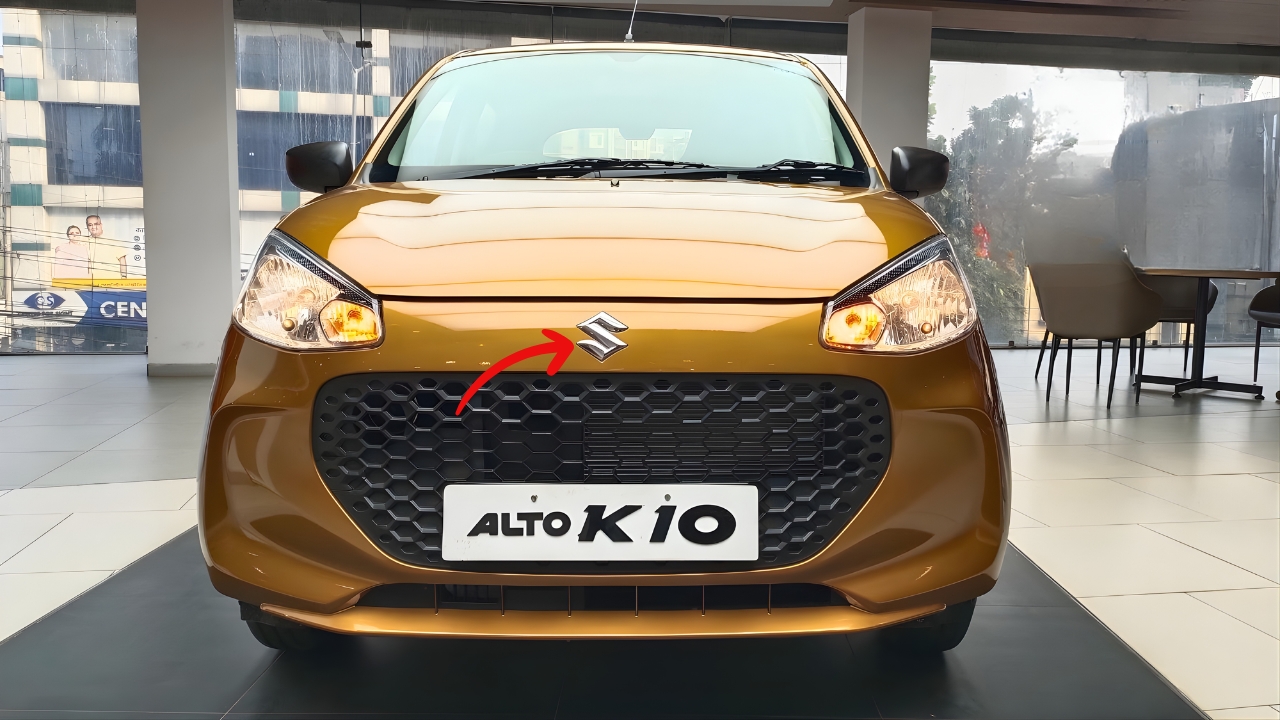
The Alto K10 does not chase flashy styling, and that is part of its appeal. Its tall-boy shape, compact footprint, and clean proportions are aimed at practicality rather than drama, which helps it remain easy to park and easy to drive in crowded city streets.
While cosmetic changes have been limited, the car still looks fresh enough for its role. The focus has clearly been on keeping the hatchback simple, familiar, and functional, instead of turning it into something that would push up costs unnecessarily.
Engine and mileage
Under the hood, the Alto K10 continues with its 1.0-litre naturally aspirated petrol engine, paired with either a 5-speed manual or a 5-speed AMT, while CNG versions are also available.
This setup is aimed at buyers who value easy drivability and predictable fuel bills more than outright performance.
Mileage remains one of the Alto K10’s strongest selling points. Reported figures include around 24.39 kmpl for the petrol manual, 24.9 kmpl for the petrol AMT, and about 33.40 km/kg for the CNG manual version. For many urban users, those numbers are exactly why the car continues to stay relevant.
Safety and equipment
Safety has become a bigger conversation around small cars, and the Alto K10 has responded with a more serious feature list.
Recent reports note six airbags as standard, along with ABS, EBD, reverse parking sensors, and three-point seat belts for all passengers.
That update matters because budget buyers are now asking for more than just affordability. They want a car that feels modern enough in daily use and safer than the basic entry-level machines of the past, and Maruti appears to have understood that shift.
Also Read: iQOO Z7 Pro 5G comes with MediaTek Dimensity 7200 processor smartphone,66W fast charging
Why buyers still care
The Alto K10 still works because it solves a very specific problem well. It is compact, inexpensive to run, and backed by Maruti’s wide service network, which is a major advantage for owners in smaller cities as well as metros.
For many buyers, this car is not about luxury or advanced technology. It is about dependable transport, manageable maintenance, and a sensible purchase price, and that combination continues to give the Alto K10 a strong place in the Indian market.
Maruti Alto k10 : Market outlook
Looking ahead, the Alto K10 is likely to remain an important name in the budget hatchback space as long as Maruti keeps balancing price, safety, and efficiency.
The latest updates show that the company is not abandoning its entry-level roots; instead, it is quietly modernizing the car where buyers notice it most.
Also Read This : OPPO K13 5G launched with 256GB storage, 50MP camera and battery is 7000mAh
In a market where small cars often struggle against rising costs, the Alto K10 stands out by staying familiar and practical. That may not make headlines every week, but it is exactly why the model still matters in 2026.